
Regeneration

 iHeartRadio iHeartRadio
 Amazon Music Amazon Music
 Apple Podcasts Apple Podcasts
 Audible Audible
 Pandora Pandora
 Spotify Spotify
 Youtube Music Youtube Music
 Podchaser Podchaser
 Spreaker Spreaker
 Deezer Deezer
 Podcast Addict Podcast Addict
 Castbox Castbox
 Castamatic Castamatic
 Overcast Overcast
 Goodpods Goodpods
 PocketCasts PocketCasts
 Podurama Podurama iHeartRadio iHeartRadio Amazon Music Amazon Music Apple Podcasts Apple Podcasts Audible Audible Pandora Pandora Spotify Spotify Youtube Music Youtube Music Podchaser Podchaser Spreaker Spreaker Deezer Deezer Podcast Addict Podcast Addict Castbox Castbox Castamatic Castamatic Overcast Overcast Goodpods Goodpods PocketCasts PocketCasts Podurama Podurama
My guest is Captain David Gallimore. He is a renowned expert. Who helps others transform. He helps you look at your life to shed what no longer serves you. He walks you through reframing to enable you to build a life that brings joy and happiness. Come join the discussion. It will really help you think about and create next steps that work for you.
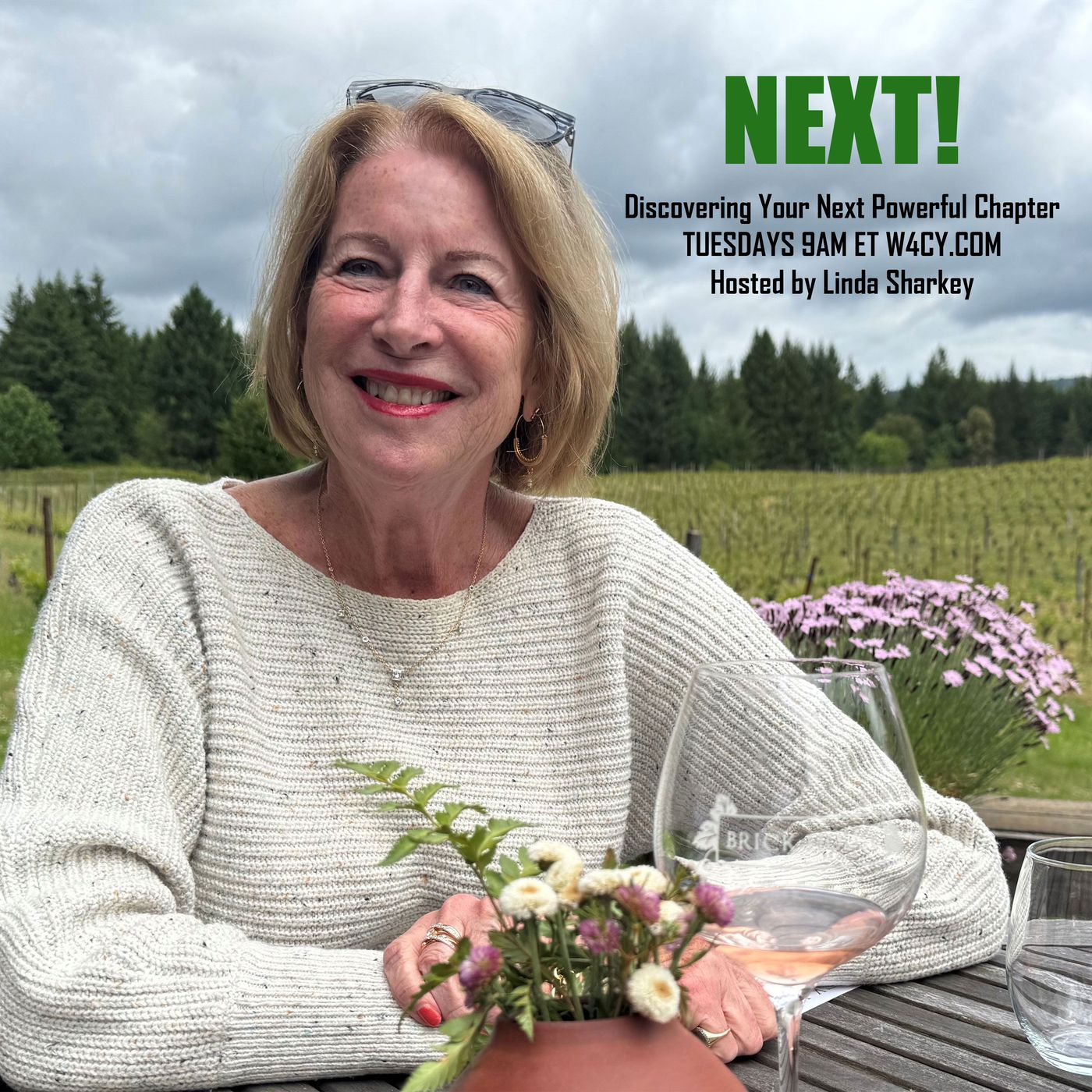
NEXT! is broadcast live Tuesdays at 9AM ET and Music on W4CY Radio (www.w4cy.com) part of Talk 4 Radio (www.talk4radio.com) on the Talk 4 Media Network (www.talk4media.com). NEXT! is viewed on Talk 4 TV (www.talk4tv.com).
NEXT! Podcast is also available on Talk 4 Media (www.talk4media.com), Talk 4 Podcasting (www.talk4podcasting.com), iHeartRadio, Amazon Music, Pandora, Spotify, Audible, and over 100 other podcast outlets.
Become a supporter of this podcast: https://www.spreaker.com/podcast/next--6825610/support.
0:00 The topics and opinions express and the following show are solely those of the hosts and their guests and not those of W FOURCY Radio, it's employees are affiliates. We make no recommendations or endorsements for radio show programs, services, or products mentioned on air or on our web. No liability, explicit or implied shall be extended to W FOURCY Radio or it's employees or affiliates. Any questions or comments should be directed to those show hosts. Thank you for choosing W FOURCY Radio.
0:45 Well join in for our show of Next. And one of the reasons I decided to call it next is because everyone has a next, no matter what age you are. But in particular, I'm focusing on people who at the moment may be in a different stage in their life and in their career, and what from their perspective is making the remainder of their professional life and personal life a great next for them. And I think that there are some amazing things that people are doing out there.
1:28 And somebody said to me yesterday when I was chatting with them, well, you know, you get gray hair. Women have a way to deal with that, but you get gray hair and companies are not necessarily always interested in keeping you on or promoting you to a next position. And you know, you know personally that you have a lot more to give. And my guest today is David Gallimore. If it's a fascinating man, he's boat captain. He recreated himself a number of times and has a fabulous consulting practice around leadership. He worked for Boeing in cap Gemini before he embarked on this new fantastic career, really focusing around developing great leaders. And I have a philosophy I suspect David does too, that no great ship is run without great leaders, no matter where they are in the organization, and they may not necessarily be in the top of the house. But we shall see, we shall see through all these discussions with fascinating people who have regenerated. I believe that's David's term, regenerated and recreated themselves many times over for a happy, you're, more purposeful, and more productive life.
3:03 So let me introduce David Gyallmore. Hey, captain, how are you well? You I'm good and you look pretty snappy there, and you know, on the West coast and I'm on the East coast. So that's how good technology is today. So good to be here with you in Happy holidays to you and your family. Yeah, same, same to you, same to you. Are you ready for the holidays? Oh? Absolutely yeah, I think thankfully. We're going to keep it simple and the spirit of regeneration. We're just going to kind of winter. Right winter beautiful, beautifully said. So tell me, David, give me the cliff notes on what got you to regeneration.
3:46 Linda, this has been, as you said in your kind introductions, thank you for that a journey and to be completely transparent. I think I'm still just kind of in the first few tacks using salor language along this journey that thank you me too. It's my happy place. I would say that the catalyst for regeneration really started when I met and married Margaret, who was a clinket in Teal Tan Native American born and raised in southeast Alaska. And she was already a diehard recycler, which I was, and I thought that that was sufficient, but she took it way way beyond and organic before organic produce was a thing.
4:35 And I think as a child. Of parents who didn't have much and my parents who were raised in the depression and then the war, we were very frugal. And so this idea of regeneration, you know, aligned with the logic of life, the seasons of nature, and where are their opportunities in my own life to go spring? I can summerlike into my career and my job. And I was. I was successful as an executive program manager developing different businesses for IBM and Boeing and cap Gemini. But learned from her that I can't just be working sixty seventy eighty hours a week, which was my natural inclination type a personality personality you can relate, I suspect, But she was that wonderful gang to my yang. She was that that keel that was keeping me stable. And I think your generation really started there.
5:35 Oh that's such such a nice story. So how did it move on into your career? Because I know that you The last place you worked was cap Gemini, I believe, right, And so you moved on through some major companies and then decided to go into your own consulting practice, which I might add is very successful. So how'd you make those transitions? Yeah? And if I may just maybe step back slightly, sure, because you said in your introductions that I have had many transitions, many many pivots, many tax and part of it is my neurodiversity ADHD, and I have a number of clients like me that I think it's a little bit of fear of missing out, a little bit of oh shiny object, oh right, secret squirrels. And so those pivots really, I think have formed my character and also have created an amazingly rich life. So transitioning from systems engineer at IBM to then founding a company by being able to see around the corner and unbuddling IBM's technical training from ten million dollars mainframe sales, and that was hugely successful, and I got to apply my master's degree in adult learning theory and technology. Another transition that was very momentuous was realizing that as a as a lover
7:09 of teaching and learning and then sharing what I learned and successful at that it was the first place where organizations would cut their budget. So as the training director of two different companies and getting laid off because it just wasn't building product, selling product, supporting customers. And so though I love teaching and I still teach sailing, and I certainly teach clients, and in my writing, I think of myself as as a teacher. It didn't put food on the table as a sole provider. So then becoming a program manager and bringing new technology, new disruptive technologies, and new business models together to create value and had the privilege of doing that at Boeing and at cap Gemini.
7:56 And then there's this thing called agism. And I know you are finding in your own next chapter joy and a sense of adventure that I'm sixty three and I think of myself as still forty three, and yeah, I've. Chopped twenty years off of me too. Right, Yea, to me, it's not about calendar ad It's about it right, how I feel and what I can do. And the biggest thing I find is have to overcome fear. We can maybe talk about that. Yeah, let's talk about that in a moment. That's a great concept because I think we all function at a level of fear. And I'm just going to throw this in.
8:39 You know, I've done radio shows before, as you well know, but I've been a while and I have a sense of fear that oh is it gonna go? Well? Is it all right? You know? All of that, So we'll tell. Okay, And it's completely natural. By the way, if you think that everybody else doesn't have imposter syndrome, every one of my clients and I've served over a thousand clients in my clinic at Sale University, to private clients, to myself, and how do you manage? How do you manage that? So the last pivot that really I think addresses your question is this pivot to coaching my wife after I got laid off with two hundred and fifty five other cap Gemini vps and directors at the time, it was very, very difficult for over.
9:26 A year as a sole provider. But again, my wife, Margaret, coming up on thirty six years of marriage, she asked me, what do you want to be when you grow up? And frankly, I didn't know. And I had to find my core values, which are love, which includes family and community and compassion. So it's kind of an uber value adventure. I used to have challenge and then I was attracting far too many problems, so I changed it to adventure and I have far fewer issues and way more fun creating. And how did you make that change in your attitude? Well, part of my work with clients is to help them really reflect on who they are at their core.
10:14 We all share across the globe, cross cultures, cross ages and ethnicities, you know, peace, family, health, But those are not sufficient. Excuse me, I get all choked up just talking about this. It's not sufficient on a Monday morning when really what you want to do is kind of stay under the covers and eat pizza. The idea of who am I now at this time? And the word challenge when I reflected in my journaling in the morning or when I was doing my Marshall Goldsmith Daily questions, did I do my best too? Dot dot dot. Live challenge? And I thought, yeah, I did so well that I attracted way too many issues. And so I'm going to reframe that into adventure. And I still have problems and issues, we all do, but that explorer mindset has been so game changing for me.
11:12 That's so important, you know, reframing that problem mindset to explore mindset. I think people in our situation. I'm older than you, I'm not going to say much, but you know, changing that mindset to an explorer and an adventurer makes it so much more exciting. And problems and weight and I don't think that's easy for people. I mean, it sounds easy, but it's not easy do that. It was a muscle that I clearly had to strengthen because our identity is so indelibly part of us, either through how we were parented or society's expectations, the media right, and if I hadn't had that year of unemployment, which now I think it was a huge gift, I really.
12:08 Do because it was. It did it. It forced me to confront what is it that I'm really wanting to do in the world. And when Margaret said what do you want to do when I grow up? I said, I really want to coach people, and not necessarily the traditional just ask questions kind of a coach, but that hybrid where a little bit of teaching, a lot of deep listening, doing formulation, getting to the root cause of somebody's challenges and opportunities. And then again, not everybody wants to have a coach. They what they want is the outcome. So it's not about me. It's not about the billable hours, it's not about creating a client for life. What it's about is can we do in ninety days or what can we do in thirty days, what can we what are the outcomes that people really want, and focus like a laser beam on that. That was the kind of coaching. So I brought a lot of how I led teams, you know, create an environment where teams can come and do their best and most creative work.
13:19 And if they get blocked, which happens all the time, you know, using Eli Goldratch's theory of constraints, zero in on this constraint, like the Toyota production line where the assembly worker pulls the and on cord and stops the line and the red light spin and the sirens and the SWAT team comes. Out and helps. That was the approach that I. Was taking and I'm taking with clients so that they get really clear about who they are, what is their brand? In other words, how do they show up in the world, how do people see them? And if we don't manage our own brand, others are going to manage it on our behalf. And so living more consciously I think has been the biggest awakening that I had. And as a result, when I've aligned, you know who I am at this point in my life, and it does change I think over time. But once that the thoughts and the behaviors and the opportunities. It's easy then to say no, thank you for an ADHD neurodiverse person to say no of the hardest things to do. But with that, using the core values as a as a decision criteria has been game changing. And the other tool that I think has been very helpful I discovered thankfully with the Google algorithm.
14:43 I saw a YouTube video about Ikey Guy, which is. A Japanese fascinating Yeah Japanese philosophy about your reason for being and if you are a student of the Blue zones, these are the yeah seven eight areas around the world, including Okinawa, Japan, where you've got fascinating per capita more centenarians than anywhere else in the world. One of the common traits is that they are living their passion. They feel in contribution to others and services to others. They're getting paid a reasonable amount, not too little, not too much, but goldilocks just right, and they have that sense of meaning and purpose what Simon Sinek calls are why and once those things are aligned, well, now you can just take off.
15:38 The boat just just flies down the water. You know. It's fascinating, though I a couple of years ago. I guess I went to Sardinia because it is one of the Blue Zone countries and the sense of community there is also a factor of Blue Zone organizations and you could really, you could really feel it there. It was not a materialistic place, as you know. And there is a blue zone in the United States. I think is Loma Linda? Is it? That's correct, it's named Linda. It's a foreshadow. It's a foreshadow exactly, exactly. Well, that's fascinating, right, right, So what is your next for you now?
16:24 Thank you? This is still evolving. And back in November of twenty twenty one, when I was just fixated on the world leaders coming together to help put a plan, single plan, and an alignment along that plan about how we can improve the health of our people across the globe, improve the health of our biodiversity, because we're not the only species on the planet, right and then if we arm an arm work together instead of working against one another, we could actually improve the health of our planet. Despite what Elon Musk is. Saying about we're all going to be going to Mars, I can't imagine eight, nine or even ten billion people, which is likely what the planet will support leaving the Earth anytime soon. So as a captain, professional captain doing deliveries on the ocean and enjoying ocean adventures, the first priority is you take care of your ship, our only home.
17:25 So how do we do that right now? The polarization of our country, not just in the US, but all. Over the glor worldwide. Yeah, and if you saw the movie Don't Look Up, which was a bit of a kind of a comedy, a dark comedy about hey, how some of these topics like climate and. Social justice. I mean, these are big, narrowly challenging, multi millennial challenges. I would call them polarities to be managed, not problems to solve, right, And I. Like that perspective too. Not enough people have that understanding the polarity. Go ahead.
18:06 I'm sorry, it's been really it's great. I'm so glad that we're having this dialogue. It says what I love about what I do right, get to meet with smart people, thoughtful people that want to make a difference in the world. So this pivot that I. Made after November when frankly the world leaders were not coming together, and I said to Margaret, I've been given so much opportunity. I feel so blessed, you know what can I do? And so that led me on a four year journey and I'm still evolving. But my basic belief is it has to start with each of us. And I put my finger on my own nose. What are my shadows? What are the blocks that I still have that I'm not willing to actually do anything about?
18:54 Like sometimes I procrastinate, in fact on things that are traditionally challenging for me, financial management or some of the detail stuff. I'm more of a bigger picture person, and I surround myself with people that are brilliant at managing all of the details. Well now as a solo opreneur, guess what, I get to do the vision, but actually do everything. Else rights that path myself, so I understand completely. So I'm still working through that and asking for help has been huge, right, lowering one's ego and pride and just saying, you know what I suck at this?
19:37 Can you help me? So beginning with me. How do I create more emotional resilience and more emotional capacity. There's been a lot of inner work looking at why am I feeling in some venues, like writing my book why do I think, Yep, yeah, it's about regeneration and and how can we do that at a personal level. So when you throw a pebble into a pond, a very pom pond, it creates ripples, and I believe the ripples that I can help in that environment where people can come and do their best, most creative work. This is now aligned around the improving the health of our people and biodiversity and our planet. And I believe that business is a huge lever also beginning with me, my family, my teams, organizations, our community. If we can arm in arm, just continue to level up or tack our way to healthier day by day, and then we create more capacity to maybe not be so selfish. And again I put my finger on my own nose as a recovering someone who sometimes just thinks nothing but his own needs and objectives and goals. It is about this need for creating a collective and consciousness, raising that we are not necessarily at the top of the pyramid, but were in fact
21:08 are part of this ecosystem. And frankly, to be blunt, Mother Nature, the planet Earth, she doesn't really care if we live. She doesn't There have been five previous mass extinctions, and we're in the sixth and there's no guarantee that we will survive unless we adapt. And I think that's where my father, Peter Gallimore, who is an executive at Boeing, he said, you know when people get their nose and their toes over the precipice, so imagine you're leaning right over the Grand Canyon. That's when our inventiveness, our creativity, and when we come together. We've seen that just here in Seattle with our two atmospheric rivers. People are pulling together to help our neighbors that have lost everything in the floodwaters. I'm sure you've seen it where you are in New England and New York where they've had all sorts of hurricanes and flooding and other things over the years, and people come together. We came together after nine to eleven, so we know it's in us and I just want to be that again, create that environment, lead by example first, and just share like Marshall Goldsmith does, as really as I possibly can, to help others with their own journey and realize that they can be who they want to be.
22:32 So that's my mission right now is to help leaders purpose driven leaders and their organizations to be who they want to become and in the process of that create capacity to maybe look at their own behaviors, their own decisions, how to improve the health of our people, biodiversity and planet. You know, that's so interesting because it's very difficult. You know this, and I know this most a lot of our colleagues know this. It's very difficult to look yourself in the mirror, at yourself in the mirror and recognize those things that you really have to change. And you may know it deep down in your heart, but it's it's very, very hard to do.
23:18 You know. How Marshall Goldsmith is, for those who don't know, is a very I guess David I would say, the world's leading executive coach. And interestingly enough, he has decided that he doesn't want to do that anymore because he thinks he's past, you know, his prime. But he's still doing a lot of really interesting things. You know. It's really tapping into those values that are so so important and really trying to live them. So give us a little insight when your book, what's the title of your book, when's your book coming out? What can this audience get from. It well, thank you you I do. If I may just talk just briefly about fear.
24:04 Yes, that's very important. I love that. And then and then I'd love to talk about just where the Regenerate You is the title of the book. So, as you described earlier, there are this tension between what we know and then what we do. About what we know, and that's the fear factor. I think fear is a part of that. Also lack of clarity for me anyway, like if I have too many options, if I've been watching too many YouTube videos or read too many books, and I'm just diverging at some point. And again, in their spirit of regeneration, you can't always be living spring and summer. Sometimes you have to let the leaves fall right, then tend to your soil in the winter right, and then you can, you know, grow anew in the spring.
24:55 Great analogy. I love that. Well, this is the logic of life. Three point eight billion years of evolution of life, and we human beings have been around roughly two hundred thousand years, and we think we've all got it all figured out well. I think a lot of the indigenous people of which my wife is an elder now and a loving spirit. I think we can learn a lot from others that are more aligned with nature. More aligned with nature, I think that's really great. Yeah, concept, but. That may be another conversation that we can have and I would yeah, I would love to do that with you if that you serves this audience and yourself. So back to fear briefly, I think acknowledging that I have a fear about, say, detail work and financial management, and exercise that I don't like to feel uncomfortable.
25:52 Those are probably my big three. I have to acknowledge those. And then this idea of atomic habits and little steps. How do you hate this analogy but we all know it. How do you eat elephant? You a bite it at the time? Oh right, I actually haven't heard that in analogy, But okays it is the small things. Yeah, everybody I think wants this immediate transformation. I tell my clients who said, well, what can you how you how do you help me transform in three days? And I go, that's a miracle, And I don't do miracles. That's right, If. You want to work for ninety days, I can help you.
26:32 And and so it's really about acknowledging the fear and letting the fear bubble up. Michael a singer who yeah, the untethered soul and the surrender experiment. That was a huge catalyst for me. He was referred to me by my mentor and friend, Bert Eckert, who runs a company called qlx dot com. And I just know that by letting those emotions well up, the full emotions well up, putting a label on them, that was very helpful. To have that emotion wheel where you've got maybe fifty or sixty different emotions that are written down. So now I have language, and then I can ask for help from people that are better at detail work and better at financial management, and better at exercise and being kind and gentle with myself when I suck at this for a while.
27:29 And that's important, and not just to give up, you know, sundering never you know, it's like, oh God, I really can't do that, but you know whatever. So David, one final quick question. When is your book coming out? Oh? It came. It was supposed to come out seven years ago. Linda, Oh yeah, well, I understand. That all katting aside. I have a literary agent. We're in the process of putting a book proposal together, I've written the book. I just don't know. Oh, you just got to get a public Yeah. I thought about self publishing, but I also recognize that a more traditional writing publishing relationship can create more impact.
28:11 And that's what I as my sixth value is impact. And so I'm hopeful now if I can't get a publisher for in twenty twenty six, then I will self publish. Yeah. Well, you know, I hope you get a publisher and if I can help you in any way, I Wiley Press and McMillan Press published my books. That's what we're looking at, is Wiley. Yeah. I had a good experience with them, and we won't borrow our audience with that. But you know it. I will just tell you personally that I think there's so much self publishing going on and there's no monitoring in my view, and if you go with a publishing house that is credible with a lot of experience, you get I guess the good house does it? Even good house keeping still exist? I don't know, but you know you get the seal of approval of a very credible organization. Well, David, this was great. Any last words you want to share with the with the audience.
29:16 I would say this one thing that when you think about the beginning with the end in mind, Stephen Covey one of those seven habits, and there's a terrific book and I'm I'm sorry, I'm forgetting the woman's writer's name. We put it in the show notes. But five Regrets of the Dying. Oh interesting, I've seen that book. Looking at your you're on your your last gasp, just before you transition, right, What what do you want to be known for? What? What is your legacy? That's a great question, and I'm still in the process of answering that question. But I'm much much clearer about what I do on a Monday morning, living my core values, being in service to others in a way that also lights me up.
30:06 So it's not. A forced march, but it's a joyful adventure. And if you can get as clear as you can, as early as you can, and you can thrive at any age, then you will live a life of joy and ease. You'll make your work your play. I don't intend to retire. I don't think you do either. I just will be choosing forms and fun people to be with and interesting, challenging problems to solve until I can't. So that would be my closing wish is everybody thinks about there just before they pass, what do they want to be known for?
30:48 And to not wait momento Marey the stoics say, remember death, not in a day of downer perspective, but in a this is a day that might be our labe. How do we just squeeze all the juice out today? Right? Yeah, that's really great. You know you've inspired me in this conversation. I really feel a new breath of excitement because of our discussion, and I thank you a lot for that. And I'd like you to just say to the audience how they get a hold of you, David, because I think, you know, people need that opportunity to really get to their core values and understand what they are and understand what they look like in action, and you could be great help the people on that score.
31:35 So how do people get a hold of you? I suspect that you'll have a couple links in the show notes and people can go to Regenerative World Group Okay dot com. It's quite a mouthful, but Regenerative Worldgroup dot com and you can learn a little bit more about me and I have a number of free resources, and it'd be a privilege to speak to any of your listeners. There's a fifteen minute Discovery call if people want to just have a chat about something that's priceless and essential to them, Oh okay, and help them maybe reframe something so that they can move forward. Yeah, well that's a great those are two great criteria we're thinking about things. Well, thank you so much, David.
32:17 This was enlightening. It was great, And you know, I've known you for a while and I learned a lot of stuff on this discussion that I did not really know, so that was really good. Is the best part of being a podcast host? Yeah? Well, like I said to you, you know, it's not about me. It's about the guests and what they can, you know, bring to the party. So you have a wonderful rest of the holiday season and a great twenty twenty six. Thank you so much. Okay, Well, thank you everybody for listening. I hope that you got as much out of this discussion as I did. And this show is going to be on every two weeks with interesting and exciting people who've done a lot in their lives and are continuing to do a lot in their lives, no matter what stage they're in. And you know, I coach some students at UNCW Wilmington in North Carolina, and it's funny. Every it's not funny, really, but every person, no matter what age they are, at a certain point are thinking about what's their next. So I want to break the attitudes and thoughts about people who are older, who can't continue to contribute to the world in a really meaningful way. Change our thinking about that, because we're all going to live supposedly somewhere closer to
33:52 one hundred than people in the past have. Anyway, it's been a pleasure. I hope you got some thing out of it, and stay tuned look for me again. Bye.


