
Unlock your hidden potential.

 iHeartRadio iHeartRadio
 Amazon Music Amazon Music
 Apple Podcasts Apple Podcasts
 Audible Audible
 Pandora Pandora
 Spotify Spotify
 Youtube Music Youtube Music
 Podchaser Podchaser
 Spreaker Spreaker
 Deezer Deezer
 Podcast Addict Podcast Addict
 Castbox Castbox
 Castamatic Castamatic
 Overcast Overcast
 Goodpods Goodpods
 PocketCasts PocketCasts
 Podurama Podurama iHeartRadio iHeartRadio Amazon Music Amazon Music Apple Podcasts Apple Podcasts Audible Audible Pandora Pandora Spotify Spotify Youtube Music Youtube Music Podchaser Podchaser Spreaker Spreaker Deezer Deezer Podcast Addict Podcast Addict Castbox Castbox Castamatic Castamatic Overcast Overcast Goodpods Goodpods PocketCasts PocketCasts Podurama Podurama
We are have more potential then we realize and we often underplay it. Join me with Janice Perkins who is an extraordinary master at bringing out the best in you and seeing and leveraging your hidden talents. Janice is a world renowned executive coach. She is not just an executive coach with uncanny insights and observations-she is a catalyst for transformation helping individuals , teams, and organizations achieve greatness. Join me for this insightful conversation where you can learn your NEXT.
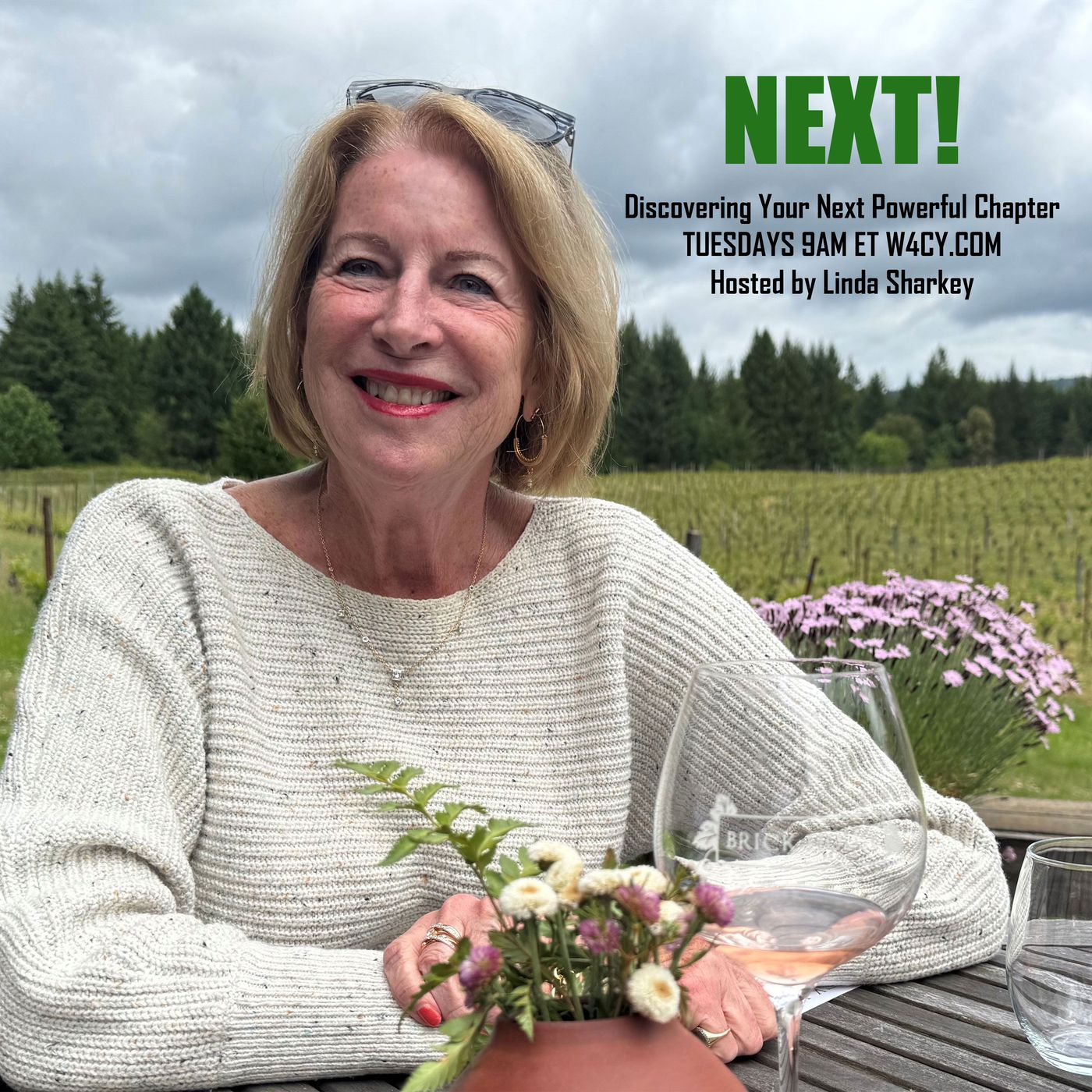
NEXT! is broadcast live Tuesdays at 9AM ET and Music on W4CY Radio (www.w4cy.com) part of Talk 4 Radio (www.talk4radio.com) on the Talk 4 Media Network (www.talk4media.com). NEXT! is viewed on Talk 4 TV (www.talk4tv.com).
NEXT! Podcast is also available on Talk 4 Media (www.talk4media.com), Talk 4 Podcasting (www.talk4podcasting.com), iHeartRadio, Amazon Music, Pandora, Spotify, Audible, and over 100 other podcast outlets.
Become a supporter of this podcast: https://www.spreaker.com/podcast/next--6825610/support.
0:00 The topics and opinions expressed in the following show are solely those of the host and their guests and not those of W4CY Radio, its employees or affiliates. We make no recommendations or endorsements for radio show programs, services or products mentioned on air or on our web. No liability explicit or implied shall be extended to W4CY Radio or its employees or affiliates. Any questions or comments should be directed to those show hosts. Thank you for choosing W4CY Radio.
0:45 Hello, thank you everyone for joining the show today. I'm very, very excited to have Janice Perkins, who you're going to find is really a spectacular individual. She is able to tap into your hidden potential that most people often don't see in themselves. And Janice can help bring that out through her coaching and through her executive experience. And she has helped many, many leaders and executives really find out how to shine and what's their secret sauce. So with that, I'd like to introduce Janice Perkins.
1:29 Good morning, Linda. Such a pleasure to be here this morning. Well, it's so nice to have you, Janice. I just think back of that great fun time we had in Washington, D.C., out in the garden and, you know, talking. And it was just it was just. Wonderful. So expert on chemistry in coaching. I love that tagline. That's beautiful. What made you pick that? Thank you. Well, I just finished my PhD in May and my research was on chemistry. Congratulations. Thank you. That's a big deal. I saw the doctor in front of your name. That's a big deal. Yeah. It felt like giving birth for sure. I'm just really fascinated by the connections that happen between people and the acceleration that can take place. Part of it comes from a fascination of coaching sports for a while and also being an athlete and seeing how on the athletic side, leadership, embraces the use of chemistry more than on the corporate side.
2:33 And so I really wanted to understand in coaching, right? Chemistry really builds momentum in the practice of coaching itself. And how can we learn what it is, how it's built and how to teach others to use it? Wow. So you are really starting your next now. Your next is Dr. Janice Perkins helping people with their chemistry. How do you help people to tap into what their chemistry is? How do you get them to discover that? Mm-hmm. The interesting thing about chemistry is that it has to manifest between two people, right?
3:14 It's not just individually held. Although what I did find in certain situations, Linda, that I found fascinating is that within a relationship, chemistry can be asymmetrical. So one person can carry the chemistry until the other person catches it, so to speak. Interesting. Interesting. Interesting, especially the outcomes for leaders relative to that and other coaches is that in any relationship, there is ownership on both people to eventually, right, share in the chemistry and the space between them. But we do have a responsibility as the coach or as the leader to hold the chemistry or carry it when others can't.
3:57 Wow. So do people eventually catch joint chemistry together? I mean, does it eventually become that sort of chemical spark between the two of them? You know, interestingly enough, in all my coaching pairs, yes. But what I did find is there are different layers to chemistry. Meaning for some people, it's very transactional. And for other people, it can be all the way down to being felt somatically, right? Like The chemistry gave me, you know, goosebumps or that aha moment or something like that, that's more felt. But for others, it is the conversation just flowed easily, right? And so it's much more transactional, but all of them felt chemistry.
4:42 It just manifested at different stages for each of them. So how does this way, I know this is off your topic just a little bit, but how does this manifest itself in love relationships? Because love relationships that people often talk about, well, we just had this chemistry, but sometimes that's not enough and it doesn't work out. So do you have any insight into that? I am going to take a couple guesses at it. I think it's really interesting because chemistry in that romantic sense is what we understand, or. Maybe in athletics. And I do think that related to the intimacy of a romantic relationship, there are other things that play into it, including other hormones.
5:27 And other things, right, that. Make us attracted biologically to certain people that play into chemistry. But I do think that that adds to the chemistry happening quickly. But I think it can happen like you and I, we experienced in the first time we met on the patio, we had very instant chemistry in orientation, right? We both felt there were so many commonalities, but we were also kind of mutually oriented in that situation to being open and vulnerable to each other and sharing. And when you enter the space with the same mindset, that automatically creates some of that orientation that where chemistry can thrive.
6:09 Wow, that's really, really interesting. So Janice, how did you get into this? How did you, was this a long journey for you that you discovered this? What brought you into this space in the first place? I think initially when I was coaching my daughter in volleyball for probably about eight years, as well as just remembering being an athlete, there are so many times when the right people on the court aren't exactly the same every single time. It's a really interesting thing that one player's mindset, mentality, everybody can be off. And it's not...
6:51 an easy equation that that player is the best at that position. And so everything should be better. Sometimes the chemistry on the court is what you're looking for and you can't guess until you get the right people in it. And that was always really interesting to me because it's unpredictable. And it moves and it's flexible and pliable. And you have to be open to, as a coach, to not try to force the equation to be exactly what you want it to be for the outcomes. And I just realized the more I got into coaching that the same factor was at play and what happens in a coaching relationship, and how much we don't understand that from a leadership perspective, and we're not utilizing it. Especially when I hear leaders talk about learning techniques, and they're focused on engagement, and all these other disciplines related to leadership. And yet, energetically, they're buzzwords, and we can know about them all day.
7:54 And develop them. Yet, if energetically my mindset isn't open to chemistry, I'm probably not utilizing or tapping into even half of what I could be in the relationship. So have you had situations? What do you do actually when you can't tap into somebody's chemistry or you have a group of people and the chemistry is just, A, have you had situations like that? And then what do you do? Well, I actually had recently a team that I was working with that had been in. They. Were in a divisive kind of situation and they weren't very collaborative.
8:35 And I did two things. One, I had everyone stand up and stand beside each other in a row as a physical reminder that we were all on one team against whatever obstacles. Sometimes. putting the. Physicality of the situation back in the right position changes our mindset. And so that's kind of how we started. And then I also had them do an activity where we were all physically interacting. We actually kind of like stomped, snapped, clapped, and like made a song together. And forcing collaboration into a completely other area before asking for it to come into the intellectual were two different pathways that I was using to build that chemistry before we went into the subject matter, if that makes sense.
9:25 That makes a ton of sense. And did it work? It did. Absolutely. Are you still working with that group today? Yes, I am. I have a follow-up next month with them. And by the end of this, we were together like two and a half hours. There was openness, vulnerability, sharing, cooperation. There was all this really amazing transactional. I did an interview, each of them individually, to find out where they felt right. The level of chemistry, but everything shifted. Well, that's really great. Now, do you ever, I have this personal experience where you get people into that phase and then you have them stay overnight together where they're, you know, at a retreat or something and they have to have dinner and they have to do all this stuff.
10:16 And then the next day they just take off like rockets. Have you experienced that? Yeah, I have. I did a similar retreat a year or so ago with another leadership team that was also struggling and wanted to do a retreat and escape. And the very same thing happened. We opened the retreat. And by the next day, there was more cohesiveness. And I think that also happens because you're outside of your typical geography and your working environment. Right. And that can help you up too. Right. Right. So, so Janice, now that you've gotten, well, oh, I have another question before this one. What was your worst nightmare?
11:02 With a client? Yeah. Or situation. There was a client or situation, but worst nightmare. There was one coaching client that I had that, It wasn't really a nightmare. The client just wasn't making progress anymore. And I think that the relationship had gotten comfortable. And there wasn't as much allowance for me to challenge or create tension for growth. And because of that, I really just had to let that client go. So that was just an uncomfortable. It was. Maybe an 18-month coaching engagement.
11:42 And by that time, it was. It had just, it had passed its viability, I think, as a stage in that relationship. That was just hard because I really wanted the client to continue growing. The other situation that was incredibly challenging for me was a particular client and they wanted to do some leadership development training for a blue collar sector of the organization, their manufacturing, and it required a translator. And it was my first experience doing that. And I would do it much differently. In fact, what we talked about doing with the client is really having probably headset translators would have been more fluid, but it was cost prohibitive. So we had a live translator and it just broke the rhythm of the training, right?
12:33 It broke the rhythm of the training for both myself and the recipients of the content and the translator. And so. I feel like it was just an absolute chemistry killer because there was too, there was too much time in between things and there wasn't a flow of information. So I would just do it very differently if I did that in the future. That was, but that was like, you know, you're in it and you just got to stay with it. What do you do? And we, we kept. Laughing that it was awkward and clunky and we were. Just going to keep moving. Yeah. Yeah. I've had that happen to me, too, in Japan. It was horrible. I hate it. And I've also had it with the headphones.
13:16 That's not a hell of a lot better, I don't think. Probably not. But it is difficult. It's difficult to keep that connection and that chemistry going with the group. Right. So now that you're Dr. Janice Perkins, how exciting. What's next for you? What's the next big thing on your horizon? Horizon. Hmm. That's a really good question. I have been doing a lot more writing. I definitely want to kind of translate the research that I found in my dissertation into public facing content that people can use. And so I'm actually writing on the academic side and the public side. And I just got back my first, apparently in academia, it's very, it's great news.
14:00 I got a revise and. So that the research itself over a series of articles can really be published on the academic side for other researchers. There are lots of theoretical implications into some of the leadership theory related to my research, which was really, that's really fun, that there's gonna be like a long lasting impact in the leadership theory field. And then just translating all of that on to the public side. So other coaches and leaders can benefit from right? The learned aspect of chemistry, right? Sometimes, sometimes chemistry in its instantaneous nature can't be contained or controlled. It's a little bit like fire, but also you can put the right ingredients there and still build it. And so I think that that is the important thing for us to understand about it.
14:53 So what are some of the right ingredients to put there so you can build it? I mean, obviously you can see it, but you know, somebody who's in the midst of it can't maybe necessarily see it. Right. I think what I, from the research, there were a couple of simple ingredients in the soup that didn't guarantee chemistry, but definitely were present. And from the coach side, the credibility and safety, the, in that relational container or that relational space, a tuned presence and Shared ownership, meaning that you allow the client to guide the exchange in the coaching session. And then also continuity. So that opening the session is consistent. My welcome, how we warm up and get to know each other, how we close, right? That I'm continuously showing up in a very consistent way and it creates continuity.
15:53 From the client side, there really has to. There has to be a willingness and a readiness and openness to challenge so that I might be willing, but I might have limitations to how much I let you challenge me, right? That's a chemistry killer. And that there's a reciprocal engagement so that there's an acceptance to the tension and challenge and an ownership of the outcome and the process. And those things, when they're in the soup, have a much more likelihood than of chemistry opening. And what I call it, what I found in the research is that chemistry opens through one or more gates. Oh, interesting.
16:33 It doesn't have to look or open the same each time, but there are six different gates. And that is after the ingredients are in the soup, that it can come. Out through legitimacy, right? In the way that there's credibility and competence that the client then opens that chemistry to the coach, right? Or whether it's through dignity, right? In the exchange of how I show up respectfully to you or how they show. Up respectfully to you too. That's exactly right. That's exactly right. People see being valued and seen for who they are, right? And listening to that, that's really important. The other is through the relational container, right? And there are some coaches, and you know this, Linda, you do such an established job when we connected. The relational container we both brought to each other was like beautifully open. And that is something that leaders and coaches both can do. There's clear structure and boundaries, but also a great deal of openness.
17:38 That readiness and willingness... is through agency, right? The ability for as a coach or a leader. To constantly put back agency to the people that I'm exchanging with, the way that I attune to the person. So attunement is another one through listening, validation, the responsiveness and deep listening. And then that orientation gate that I mentioned that you and I had even, where we had mutual shared direction and commonality, And whether that's goals, purpose, values, right, just common ground, that simply itself can also open chemistry. So those were the things that I found that were really interesting. All of them don't have to be present.
18:22 One can simply open it. You know, it's interesting. I had an experience. I was just on Long Island, as you know, and I ran into two people who actually were in the leadership field and they actually were reasonably well known. I won't use their names, but those two people stood there and talked at me for the better part of 20 minutes. And, and I mean, I know you've had that happen to yourself and you just sort of go, I can't wait to get out of here. But why do people, it just shocked me that people with a high degree of education and frankly, what you would think that they would have enough agency not to do something like that, but they didn't. What do you do in a situation like that?
19:14 You know, the interesting thing about chemistry, and I had that happen to me recently too, Linda, and a four-person kind of conversation, professional conversation, and one person kept interjecting their resume consistently. Right? And what I found was. The killers of chemistry are all wrapped up in avoidance, control, and power. And so when one of those is exercised by any member of the team or the group, it kills chemistry across the entire band, right? It's almost like popping a balloon. So the more that interjection of ego through power or control or in the situation that I encountered, right, the constantly trying to prove myself with a resume, right, that's not credibility, that's power.
20:02 The way it was showing up. And so there was really no reason for me to continue to lean in. right? The chemistry is dead in that circle. I can remain present. I can remain in a transactional state and see if the resume, right, proving ends and the conversation could eventually open chemistry, but I can also just recognize it for what it is, right? It doesn't enable anything to grow at that point. You know, when I see something like that happening, I personally feel that you're dealing with an incredibly insecure individual, that the individual themselves probably needs a fair degree of coaching and help and insight into themselves as why they need to do that. Right.
20:53 Well, and they're not interested in you in that moment, right? They're not interested in an exchange of information or curiosity, right? And that's that there's no openness or willingness or readiness for the space between us to grow in the way that we interact and share with each other. And really one of the theories that I leaned into, which. Comes through collective. Leadership theory is from South Africa. It's the concept of Ubuntu, which is I am because you are. I love that. I am because we are. And so I am forever changed by our exchange and, right? And that is the kind of like openness and willingness that chemistry really requires.
21:36 And when someone doesn't have that mindset, like the ingredients just aren't in the soup, plus they also brought a grenade, right? If they're only interested in talking at you, then there isn't an exchange for the space between us to grow. Yeah. You know what happens to me when something like that happens? I just don't say anything. I just sit back and just listen and then make a judgment as to whether I'm going to have anything to do with that individual or that group again. And it's funny, eventually people will take a breath and say, oh, well, what about you? Well, by this point, I have no interest in telling anybody anything about myself. You know, has that ever happened? I mean, yeah, you could have contributed a ton, but, you know, I can't be bothered. So do you have a book in you, Janice? I think you have a book in you. Yes.
22:28 I believe there is a book coming maybe sometime next year by the time I finish. I have a couple of the academic articles that I want to keep writing so that hopefully that gets published on the theory side so that I'm contributing to future theory and then translating that into a public-facing book is definitely in the future. Okay. So can you share where they're going to be published? The articles are going to be published or so we can keep an eye out. I will post the, the academic articles like the, the newsletters when, when they are published. Yes. Oh, okay. So you'll post them on your LinkedIn or your, your very good. That's great. So tell me, think, think three years out. Where do you see Janice Perkins? Dr.
23:18 Janice Perkins. I want to definitely do more writing and speaking so that I can further do more research and impact related to chemistry in the field of leadership and coaching. I do believe it's a wild card that we haven't been playing, right? When it comes to the benefits and creating that continuity and momentum and outcome, all of us contributing into leadership have been doing this work for a long time. And you know, content itself isn't enough, right? And it's not even just the behavior of manifesting the application of content. And to me, this is the energetic source that can accelerate all of the other content and applications that we use and make it more successful. So that's what I hope to be doing more.
24:12 Well, you know what I love about this? It's sort of like secret sauce and chemistry is one of those words that's always been thrown around oh they don't have any chemistry or you know i mean even so many different walks of life you know like i didn't feel any chemistry or i really feel and it's sort of an elusive word and that you put you put some boundaries around it and some things around it that that people can see and recognize and touch and aside from just feeling because you do feel whether you have chemistry or not right Yes. So if you have chemistry and you feel it, how do you keep it? Can you keep it replicated?
24:53 Yes. I think that's the most beautiful thing. I only watched the coaching. Each of the coaching peers only had three sessions. And you think in coaching, that's not very much time at all to really build chemistry and grow. But the interesting thing is that trust maybe wasn't there, but chemistry was. And chemistry can create outcome before trust is manifested. As long as I create that continuity, the more there was rhythm and continuity from session to session, the more that it increased the ability for chemistry to automatically be there again the next time. So trust is a big factor. It is in the long term. It's an outcome, really.
25:35 And I thought that trust was going to be at the beginning of chemistry. But in fact, chemistry is really more the precursor to trust being formed farther down the road. Oh, that's very, very interesting. Well, Janice, I wish you all the luck in the world, and anything I can personally do to support you would be out there. I'm just so excited that you got that PhD. I do know, actually, how much work that goes into all of that. So how do people get a hold of you? And how do they connect with you and get you into their organizations to help them? Absolutely.
26:18 Find me on LinkedIn, Janice Perkins, as well as my website. The organization that I created is called Capacity. And so the website is IHaveCapacity.com. You can book an appointment with me straight from the website. And there's a link from LinkedIn to that as well. Or on Instagram, I am Janice Perkey. Oh, Janice Perky. I could make a little, the Perky Janice person. That's right. That's right. That's how you find me. And also I have a YouTube channel under capacity and my name that also has lots of content on it. That's I've been nerding out talking about chemistry now for a couple of months. Oh, that's great. Oh, I love it. I'm going to have to go on. So what's the channel. I mean, Is that a stupid question? Should I know?
27:01 Janice Perkins. Oh, wow. That's very exciting. And one final question. Didn't you just get back from Spain? Well, I was in Spain a couple of years ago. My sister was stationed there and it was lovely. I went to Montana this summer. Oh, okay. Nice. What did you love about it? I did not do. Um, Montana, the raw beauty, uh, was really, really, and there was a lot less commercialism, a lot less tourism that, you know, it's very much a hiking, fishing, hunting kind of community. And so there's just a lot less commercialization than there is like in Colorado or even around the Tetons.
27:46 So I thought that was really marvelous. We went all the way up near a glacier. Oh, wow. Wow. Wow. But Janice, I can't thank you enough. Congratulations on your doctorate, on your articles. I can't wait to see your book when it comes out. I think you have really hit on something extremely important for relationships, not only in coaching, but in general for relationships, because chemistry is such a bantied around word that people really, I'm not sure really understand. And you've put some real... insight and clarity into it. And I think that's really great. Thank you so much, Linda. It was a pleasure. It was lovely to see you. I'm thankful for the audience.
28:30 I'm thankful too. And join me next week on Tuesday. We will have another insightful discussion on leadership and what things are brewing on the leadership front. Thanks a bunch for coming on board.


