
Is failure inevitable? Yes!

 iHeartRadio iHeartRadio
 Amazon Music Amazon Music
 Apple Podcasts Apple Podcasts
 Audible Audible
 Pandora Pandora
 Spotify Spotify
 Youtube Music Youtube Music
 Podchaser Podchaser
 Spreaker Spreaker
 Deezer Deezer
 Podcast Addict Podcast Addict
 Castbox Castbox
 Castamatic Castamatic
 Overcast Overcast
 Goodpods Goodpods
 PocketCasts PocketCasts
 Podurama Podurama iHeartRadio iHeartRadio Amazon Music Amazon Music Apple Podcasts Apple Podcasts Audible Audible Pandora Pandora Spotify Spotify Youtube Music Youtube Music Podchaser Podchaser Spreaker Spreaker Deezer Deezer Podcast Addict Podcast Addict Castbox Castbox Castamatic Castamatic Overcast Overcast Goodpods Goodpods PocketCasts PocketCasts Podurama Podurama
Join me for a discussion with Fiona Macaulay on how to bounce back from failure and be even better. Fiona is a master at what to do when the inevitable happens. Her tips and insights are profound. Her global experience adds a whole new dimension. Look forward to seeing you soon.
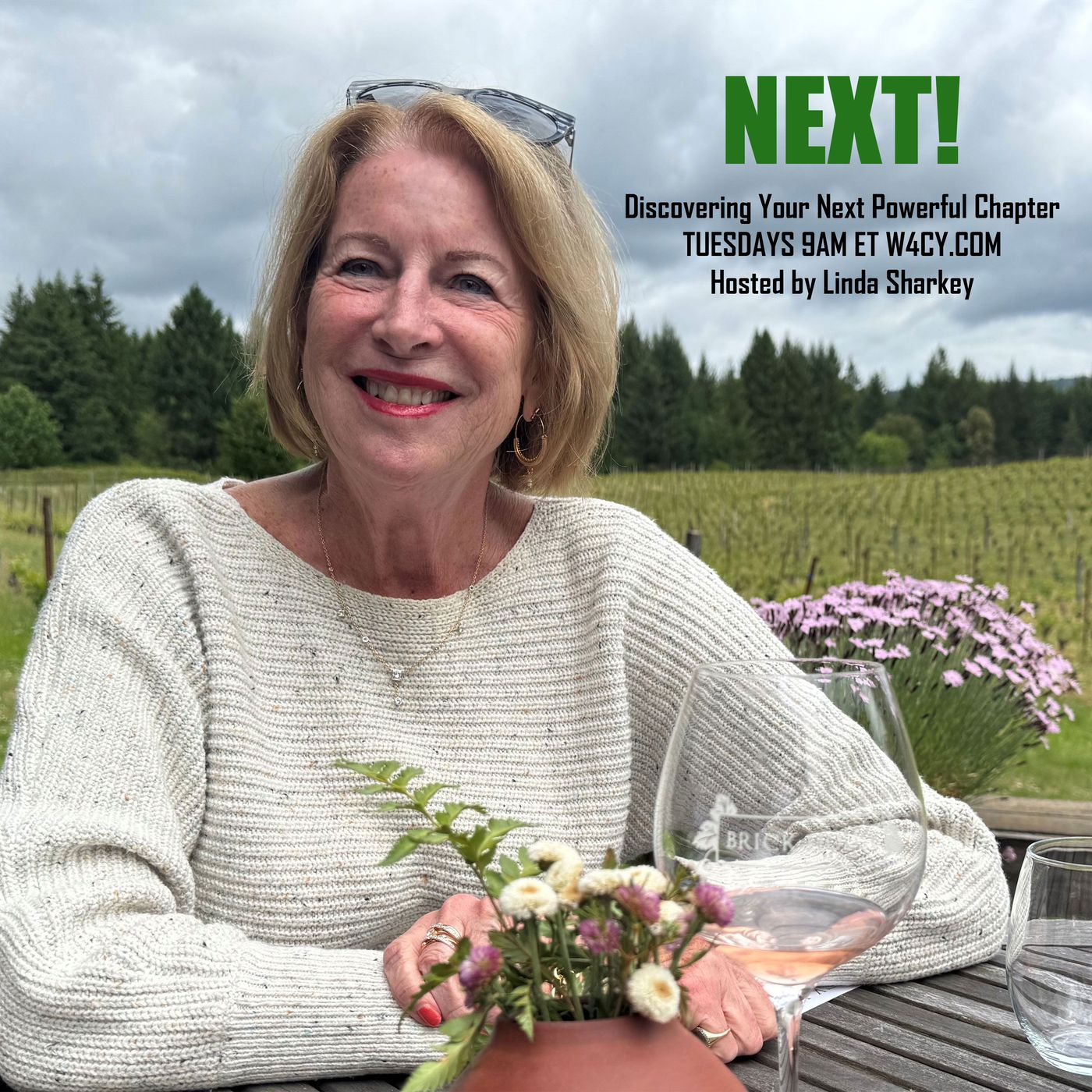
NEXT! is broadcast live Tuesdays at 9AM ET and Music on W4CY Radio (www.w4cy.com) part of Talk 4 Radio (www.talk4radio.com) on the Talk 4 Media Network (www.talk4media.com). NEXT! is viewed on Talk 4 TV (www.talk4tv.com).
NEXT! Podcast is also available on Talk 4 Media (www.talk4media.com), Talk 4 Podcasting (www.talk4podcasting.com), iHeartRadio, Amazon Music, Pandora, Spotify, Audible, and over 100 other podcast outlets.
Become a supporter of this podcast: https://www.spreaker.com/podcast/next--6825610/support.
0:00 The topics and opinions expressed and the following show are solely those of the hosts and their guests and not those of W FORCY Radio. It's employees are affiliates. We make no recommendations or endorsements for radio show programs, services, or products mentioned on air or on our web. No liability explicit or implied she'll be extended to W FOURCY Radio or its employees or affiliates. Any questions or comments should be directed to those show hosts. Thank you for choosing W FOURCY Radio.
0:45 Hello everybody, thanks for joining again, and I'm just so excited to have the show again. Actually, I just was in Washington, d C. With Fiona mcaulay and her great book Bounce Back and Aim Higher, and we had a group of phenomenal women from all over the world talking about, frankly, their failures, because you can learn a lot about failures, and some people they'll just curl up and go away and they won't keep trying. Every one of these women that spoke, including Fiona, had failures, and frankly, we all have failures.
1:28 The question is what do we do about them? Do we make our next chapter about the failure, or do we try to aim higher, bounce back and learn from it. And I would say, bounce back and learn from it. And here's Fiona giving you the details of all of this. Thanks so much for listening, Hilinda. Fiona, Hey, it's great to be here with you. All right, So tell us about a bunch of stuff I want to talk to you about. But how did you did you get into this in the first places? Such a great entrepreneurial background. I worked in the global development industry for twenty five years, and that's the industry which works towards access to clean water overseas, gender equity, access to healthcare, helping communities grow climate resistant agriculture. And what I saw, Linda, I had the privilege of working in about fifty different countries and worked with hundreds of different organizations. When I was able to peek into all those organizations, what I saw over and over again is that there was women professionals who wanted to move into positions of greater leadership so they could have more power and influence and have an even greater impact in the work that they were doing and supporting others to do, and that much of the time they were really doing the bulk of the work, but they did not have that formal leadership.
2:53 Position or authority. Oh yeah right, for two reasons. One structural because you know, the jobs were not good, the jobs were more likely to. Go to men. And still are Fiona well and still are You know? In global health eighty percent of the people who work in global health are women, but they only hold twenty percent of the leadership positions. Amazing statistic, right, the data speaks for itself. And so I started the WILD Network Women for Impactful Leadership Development to support purpose driven women around the globe, so across America, Canada, Mexico, Sub Saharan, Africa, Asia, Middle East, really women around the Europe, women around the globe to be able to be even more impactful leaders than they already are by curating content both to support organizations and industries to promote more inclusive leadership opportunities and also to support women to step into their full leadership potential.
3:54 Wow, how many years has WILD been going on? A long time? I know, But well we're. Coming up on a decade. So we'll be doing our ninth Leadership for Social Impact Forum, which is we do an in person conference in DC every year in May. I'm going, Yeah, that's right. I'm so excited to. Have you there, Linda. And that's the thing. That's what's so exciting I think about this community is that we have women like yourself who have been leading in the inclusive leadership space in the US for decades. Will have a lot. Of certified leadership coaches who come from across America to attend. We also have women coming from different parts of the globe who want to be there in person. And then we have people from across the Greater Washington d C. Virginia, Maryland area who identify as being a purpose driven leader.
4:46 Whether they're working for Coca Cola or working for Save the Children or working for the US government, if they're working for positive social change, they really belong in the Wild Network and we would love to have them there at the Leadership for Social Impact. So you do, I mean just because you go to the forum, it's not over there. There is a lot of other things that go into that form actually after you actually participate, right, Fiona. Well, exactly, because as you and I both know, Linda, you know, being an impactful leader, it really is a journey. I think most of us wake up every day, wanting to be you know, the best leader, the most supportive leader that we can be, and then things happen right where you like, have time constraints, or somebody says something or write something to us that kind of like throws us off, and maybe we're more impatient than we wish we were, or we are not taking a calculated risk, but we want to be taking right. We're all working on our leadership skills all the time. The best leaders are and so we feel we know actually from the research that coming together being with other like minded people committed to leadership development inspires us and fuels us. And when we layer on leadership competencies, that helps us to kind of maintain and even you know, become stronger leaders.
6:07 And the one day is really important. We also realize that people want to stay in community. Yes, absolutely, So. For example, you know, you and I have a wonderful friend and colleague, Morag Barrett, and every year she generously does a session one month after the leadership conference. He does a session that's about how to take small steps towards ambitious goals. Because you know how it is you go to a conference and you do leave with a notepad or a phone full of things you want to do, people you're going to follow up with, and then you know, you get, as I say, like to misquote Muhammad Ali, you get like punched in the face by the by your email inbox. Right, you don't get into all those things. And so what we do is we reconnect the community a month after the event to reconnect people to their goals and then break down. Okay, how can you take small steps towards these ambitious goals, because that's the cops we.
7:00 All need, right, absolutely, well, we used to do, you know, the thirty sixty ninety day, you know, follow up with people, because that happens with executives too. You know, you're in a company and you take people through these phenomenal leadership development, inspiring things and then they go back into the same old workplace and it's gone. So you really do have to you really do need that follow up on a regular basis. But I want to I want to jump forward to your Santiago, your Comino Walk, tell us about that. That's so I'm so bummed I can't go this year, Linda. I'm looking forward to having you on the next chapter. Accelerator to me in a walking Retreat in twenty twenty seven, so we'll put it in the books.
7:44 Absolutely. So I am. I'm now in solidly middle aged like in my early fifties, and I went through a big transition when I sold my first social enterprise almost a decade ago. So in my mid forth I had been I had founded this company in my mid twenties, and so for almost twenty years had been scaling a social enterprise, and I was ready to think new things and do new things and spend time with new people, specifically focusing on boarding purpose driven women and their leadership journeys. And I was also interested in teaching and the leading business. So the time was right for me to sell that company. Up until the day that it sold, I had been busy being the CEO. I had been busy managing this confidential sale process, and I hadn't given much thought to what the next chapter would be, except for I knew I wanted to be doing those different things. And I remember the day after the sale went through, sitting on my couch being like, how do I do you know?
8:41 Oh mg? Oh mg? And as someone who was used to having power and status comes from the you know, being the CEO, of a successful, well regarded company. You know, no inbox, no. Speaking engagements, no pressing deadlines. And I think I'm voicing what a lot of leaders in transition have experience. Though baby doesn't get set out loud very much. I think you're absolutely right. So, but what I learned through that journey of then making that transition to becoming an adjunct professor at Georgetown University's Business School also an entrepreneur presence there starting the Wild Network is that there was three things that you really need to make a successful transition and to enjoy it. One is community. It's lonely to try and like figure out all these options by yourself and and to go through.
9:36 Such a change. So having a community of people who are also seeking to make this kind of change, or have made or are making this kind of change. The second thing is a process, because in a way, the world is your oyster. You know, you've also spent several decades at that pot time, you know, building up your reputation and your skills and your network. Having a process about how to leverage all of those things, but at the same time not be trapped by them is really critical, essential, essential, and accountability. So when a friend and colleague of mine started the Next Chapter Accelerator two years ago. I had had that experience of transitioning as an entrepreneur. She had had the transitioning of working for thirty years at Accenture and with that managing director. When she left, she also faced kind of similar challenges and opportunities, and so we came together to develop the Next Chapter Accelerator. And the main event that we do, we run it once a year is as a walking retreat on the Camino de Santiago, which is a historical pilgrimage trail, and we do we do a leg of that trail in northern.
10:49 Spain, which is our many leaders bucket list. So we can also do custom retreats, but the one that we do that's open is at the end of September early October every year, and we're offering those things that I mentioned. So it's an incredible group of accomplished women, like ambitious, successful women who are I think fall into these different categories. Yes, and you can tell me, Linda, which one resonates with you. So it's women who are looking for the next big job, like they're in a big job and they want one more big job probably before they down gear. It's women who are in. A big job and they want to really take a fresh look at that so they can really leave their mark and have the greatest impact possible. So it's kind of rejuvenating your approach to your current big job. There's people who want to move into a portfolio career, so they want more control over their time a little bit like I was doing, perhaps like I wanted to teach, I wanted to start this not for profit, or these people who want to have a very very active retirement, so they're probably moving into a position where they want to maybe sit on a couple of boards maybe, right, And so.
11:56 We have to do a radio show, yoh show. So Linda, I'm curious, like as I kind of talked about those people who are in transition, successful career women in transition, what like what transition would you say you had made? Well? Truthfully, I mean I was doing fine up until the pandemic, because you know, I was a public speaker as you well know, and Morag and I wrote a book together, and so it was it was Thinkers fifty this year that you were at where Linda Gratton made a comment about how much longer we all were going to live, and you know, you need to think about what is it that you're going to be you know, is going to be exciting for you. And that's when I said, you know, I sort of moved into retirement. Just like Marshall who said he was going to retire.
12:44 He hasn't retired. And I said, you know, I just have too much more that I want to connect and do stuff around, so I would put myself in the latter phase. From a career perspective. I'm excited about everything and this is this show is not about me, it's about you. But I do think that. People need that kind of reflection and that's why this this walk is so important. I think, Yeah, I think so too. And you know, it is very meaningful to just be on this historic pilgrimage trail. Some people who have. Been in our group have been religious, many people not, or people of different religions. But you know, you're just walking on steps that people have been taking for thousands of years who are also seeking something yea.
13:27 And when you're. Getting up in the morning in sort of like a small you know, a small family run hotel in the morning and you're putting on your walking clothes and lacing up your boots. You're just having these really honest conversations. Right you're literally away from it all, and you're having incredibly honest conversations about what it is that you really want, what you really want to change, what you want to leave behind, you know, on the Camino. And as we were saying earlier, that progress the program doesn't just end with the after our walking retreat on the Camino. We can you to have monthly check ins with a group. There's some coaching component and in fact, just next week I'm going out to Houston for the Houston Rodeo with the call is on the Camino last last September because a number of them were from Houston, and they've invited the Canadians and women from all the parts of states to come to Houston to spend a long weekend together a workshop where people are going to be opening up letters that they wrote elves last October, very cool elves like what's important to you, what do you want to make sure you're moving towards? What do you want to leave behind? So their letters are going to be arriving in the mail in the next few days and then next week, we're going to have a morning workshop, touching base with those goals, talking about what's changed, talking about what we're recommitting to, and then enjoying some nice meals and the excitement of the Houston Rodeo.
14:53 That sounds great. I love that. I absolutely love that. Now you know, I don't want to I don't want to get out of this show without hearing about your Aim, High and bounce Back. Your book that actually just came out yesterday? Was it yesterday? In the day before yesterday? I think, yeah, we're we're just a congratulations yeah. So, and of course we'll have lots of copies of it up in New York. Yes, So tell the audience about your book and what they can get from it. Thank you, Linda. So it's Aim, Hype and bounce Back, a Successful Woman Leader's guide to rethinking and rising up from failure. And this book has never been more important. I think these messages, these frameworks and strategies have never been important because we need leaders out there making their greatest contributions.
15:38 YEP. Leaders are facing setbacks, mistakes, failures, disappointments all the time. I feel you admire write people in your circle, people you see on social media who look like they're succeeding. I want you to know that they are having some kind of failure right now, every single one of them, every single one of us, and Linda, in a second, I'd love you to weigh in it. Something you feel like you're failing at. I don't book, I don't know well, but. I'll tell you the reason that I wrote this book is because within the Wild Network in twenty twenty one, I launched something called the Leadership fail Lab, where we invited very successful women to talk about a massive failure they were responsible for, really get into how gutting that was for them, and then to talk about how they came out of it and what the lessons are that they have drawn out for themselves and for all of us.
16:36 So, Linda, a question for you. We had one five hundred women from over one hundred countries participating in our virtual Leadership for Social Impact Forum. We had five of these very successful women talking about a major flop they were responsible for. The chat blew up and what do you think? The most common comments were, Oh, that's an interesting question. I think it probably was not taking a risk when they should have. There's something along the along those lines. Yeah, now we're facing into what the situation was and not taking the risk. Yeah, yes, you're absolutely right. And many many comments were saying that and saying like me too, Oh my gosh, me too, me too, me too, me too. And what I observed in that Leadership fail Lab and then the others we've done since then, is that women really want to talk about their failures. And it's incredibly liberating. It gives you permission to talk about your failure when other women, you know, as I say, successful by any measure, are going first and talking about their failures.
17:41 Yep. And here, I think is another thing, just being afraid that if you do it, you're going. To fail one hundred percent. And I'm so glad you bring that up, because in the book, my co author and I felt like it was important to be clear on like, what are we talking about when we're talking about failure. So we broke down. So we actually did a survey and we had to over a thousand women respond in about thirty days. Again, just another signal that women wanted to talk about failure. And we identified five types of failure. So I'll bring a couple of those up. Let me start with the one you just mentioned, and we. Should do this relatively quickly, Fiona. Quick. So paralysis like. Where you're more, You're want You know something needs to be done, you want to be the one to do it.
18:24 This maybe an entrepreneurial venture you want to start, or you want to put yourself out there for something, but you are not taking action on it because you are so afraid you might not be successful. So you've failed before you even start, because the fear of failing is keeping you from moving forward. And those women out there who you see succeeding like launching businesses or ventures or podcasts or like your radio show, Linda, I just want to leave them with this message, like, go ahead and experiment, go ahead and take small steps towards your ambitious goal because rather you try and it not go exactly as you'd hoped, rather than not try it all. Yeah, great point, great point.
19:06 So Fiona, how do well? First of all, hold your book up again? Because people need to buy this book. I mean, it is fabulous. I ordered it and I can't wait to read it cover to cover. But I know all about it because we've been talking about it for a while. But how do people get a hold of you, you know, I mean you need to spread your message in every major corporation and major groups around the world. And how did people get a hold of you? Thanks for asking. So I have taken the frameworks and very practical takeaways and stories for this book, plus additional ones, and have a sixty minute interactive keynote that has been incredibly popular with audiences. People talk about fail want to talk about failure, women, men, really all leaders because everyone's failing, as I say all the time, and most of us are keeping that close. Many of us have a lot of shame around it, and many of.
20:01 Them don't know what to do about it. Don't know what to do about it, and you're not making your biggest contribution. Your team is not making their biggest contribution because they need to improve their relationship with failure. So I would love to come to your organization be able to lead you through this interactive keynote, or we can do a half day workshop together. And the best way to find me is at Iona McAuley dot com. PULLI is a bit of a bear, so I'm gonna spell it. Let's spell McAuley like Macaulay Culkin child Star from the eighties ac A U l A y so ay yeah dot com, So Fiona, f I O n A M A c A U l a y dot com.
20:43 And I would love to hear from folks. Whatever the size of event you're doing. These messages are so important. The demand for them is so universal, and it would be an incredible gift to me, to you, to your audiences to be able to get these messages out to maximum other people. Absolutely, I'm going to connect you with the ge Women's Network that you're the kind of person that they would love to have, assuming they still have that network. But that's great. Well, thank you so much, Fiona, it was great. I'll see you in New York in a few days and you know, we can all get your books signed and all that exciting stuff. I'm very excited for you. I've taken a lot of great insights from you, and I really appreciate you being on the show.
21:26 So thank you so much. Thank you so much, Linda. I'm so glad that this is your new chapter because so many people are benefiting, including me. Thank you. That's great. Well, thanks everybody for listening, and I appreciate you coming on to the show, and I hope you're getting something out of it, and I hope you will listen to the next one. I hope you find them entertaining. And you can reach me at Linda at Linda at Lindasharky dot com and I would love any of the comments that you might have, or any suggestions or any people that you would like to hear from. Thank you very much and have a fabulous rest of your week. Bye.


