
Rising Together

 iHeartRadio iHeartRadio
 Amazon Music Amazon Music
 Apple Podcasts Apple Podcasts
 Audible Audible
 Pandora Pandora
 Spotify Spotify
 Youtube Music Youtube Music
 Podchaser Podchaser
 Spreaker Spreaker
 Deezer Deezer
 Podcast Addict Podcast Addict
 Castbox Castbox
 Castamatic Castamatic
 Overcast Overcast
 Goodpods Goodpods
 PocketCasts PocketCasts
 Podurama Podurama iHeartRadio iHeartRadio Amazon Music Amazon Music Apple Podcasts Apple Podcasts Audible Audible Pandora Pandora Spotify Spotify Youtube Music Youtube Music Podchaser Podchaser Spreaker Spreaker Deezer Deezer Podcast Addict Podcast Addict Castbox Castbox Castamatic Castamatic Overcast Overcast Goodpods Goodpods PocketCasts PocketCasts Podurama Podurama
We will be speaking with best selling author and coach Sally Helgesen. Sally is the world’s premier expert on women’s leadership. We will discuss practical ways to build more effective relationships we perceive as different from ourselves. This will be an insightful discussion not to be missed.
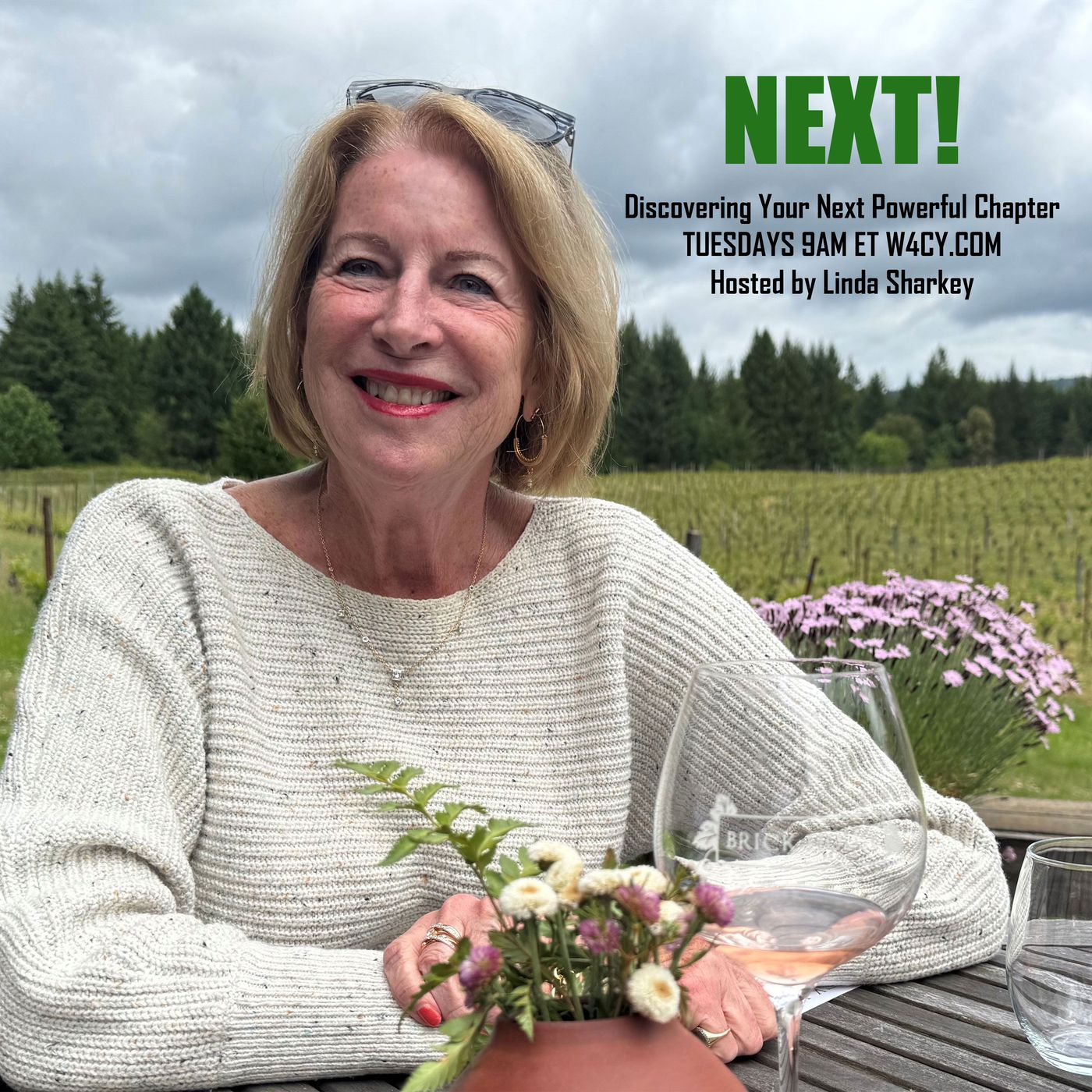
NEXT! is broadcast live Tuesdays at 9AM ET and Music on W4CY Radio (www.w4cy.com) part of Talk 4 Radio (www.talk4radio.com) on the Talk 4 Media Network (www.talk4media.com). NEXT! is viewed on Talk 4 TV (www.talk4tv.com).
NEXT! Podcast is also available on Talk 4 Media (www.talk4media.com), Talk 4 Podcasting (www.talk4podcasting.com), iHeartRadio, Amazon Music, Pandora, Spotify, Audible, and over 100 other podcast outlets.
Become a supporter of this podcast: https://www.spreaker.com/podcast/next--6825610/support.
0:00 The topics and opinions expressed and the following show are solely those of the hosts and their guests and not those of w FOCY Radio, it's employees are affiliates. We make no recommendations or endorsements for radio show programs, services, or products mentioned on air or on our web. No liability explicit or implied she'll be extended to W FOURCY Radio or it's employees or affiliates. Any questions or comments should be directed to those show hosts. Thank you for choosing W FOURCY Radio.
0:45 Hello everyone, thank you for joining the show today. I'm so excited to have Sally Helgeson as my guest. And Sally, she's just. The world's premiere person on women's leadership. She's an internationally known bestseller, she has ted talks, she's been in this business for over thirty years, and there isn't anything that she does not know about when it comes to women and the workplace and leadership. And now her latest book, which I absolutely love, Rising Together, how we can bridge divides and create more and more inclusive workplace, and I think going forward that's going to be very important. So Bet, Sally, thank you so much for joining the show.
1:38 It's a pleasure to be here, Linda, thank you good Yeah, I love your books behind there. Yeah exactly, I know, I know. So how did you get into this in the first place. I mean, we've known each other for like thirty years, haven't we various different capacities, So how did you. Get into this in the first place. Well, in the late eighties, I was working as a speech writer in a number of different corporations, and I really enjoyed the work, and I had great I worked at great companies, but I was vividly aware of the inability in the organizations that I was in to recognize women's strengths as leaders as having you know, real ideas that would count and could shape an organization. And I remember having one experience where I proposed an idea in a meeting and it just didn't Nobody resonated with it, nobody mentioned it. They just listened and then went on with what they were going about.
2:41 And I remember. Afterwards feeling like, oh, I shouldn't have said anything. You know, I'm the most junior person there, blah blah blah. And what was interesting is the idea I proposed, which was a partnership with a group that identified and New York City public schools who might be hireable at the for the company bring them in. It just didn't go anywhere, but the next year, the robin Hood Foundations suggested it to the company and it became a big deal. Now, obviously I didn't have a pull of the robin Hood Foundation, but what it did, I mean, I was just you know, young women sitting there as a speech writer. But what it did was I thought, you know what, I had a great idea that was just the kind of idea that they should have listened to. And I began noticing the extent to which we had really talented women and they felt like they were part of the workplace, but their ideas, their thoughts there thinking about the future and what the company could be, were never included in anything.
3:51 So I decided that what I wanted to write about was the skills women had as leaders, which was not a top There were books being written then about you know, women in the workplace and you know what they needed to do, and they you know, needed to leave their values at home and be like the guys. I mean, that was the theme. But I thought, you know, nobody's talking about the potential, the positives that women have. So I decided, you know, I was going to write a book about it. And the book was The Female Advantage, Women's Passe of Leadership, And it became kind of a sensation because there was nothing else. So, you know, as happened when with most people in their career, timing was extremely important, and I was able to start putting some ideas out there into the workplace in a way that would help shape it or be part of the conversation. Because this was you know, the late eighties, I got in on it.
4:52 Well that, I mean, that was brilliant. You know what I thought you were going to Well two things I want to say. One, I met you at GE because he brought you in to help with the whole diversity thing and you know, helping women expand. But what I thought you. Were going to say is that, which maybe you did. But you know, a woman will come up with an idea saying at the meeting, everybody ignores it, and some man comes back with exactly the same thing, and all of a sudden it's like, oh, well that's really a great idea. Yeah, it's essentially what happened to me. But they got the idea. They thought it was a great idea a year later when it was proposed by a group of men.
5:33 Right of course, you know, and then it sounded like really good to do, really good to do. So what are your sally, what what were your key transformation points in your career? Oh, that's interesting, Well that was obviously the worst one. Yes, And then I think I began to you know, I started getting invitations from companies come, you know, ge, you know, wonderful companies come in. Work with our group. You have a program talk about, you know, what women can do to improve their leadership style and make their voices heard. But I felt like I was a writer. I wasn't a speaker, I wasn't an expert, and I would qualify that. I mean, people would call on say, I'm not an expert. I've just wrote a book. And I had this picture of myself as just a writer for a wow time.
6:27 Yeah, and then we know you can give speeches. You've done ted talks, We know that everything I've done, everything, I've done thousands and thousands of programs all over the orright all over the world for six countries I think I counted. And so that was. Really hard for me to sort of accept that mantle of being an expert because I was always disclaiming it, this is such a female behavior. Right, it is, you're right. And once I accepted that, and once I learned to you know, people say, oh, you've had so much influence. I wouldn't say, oh, I just wrote a book or a couple of books, because I've written now nine.
7:10 But I was going to say more than a couple of books, Sally, there's a few out there, Yes there are. And it you know, that was a big transformation for me because it meant sort of accepting and looking at what I had contributed and what I could contribute. And that's how I always look at things in the last say, twenty years, is through a lens of contribution. Yeah, very very nice. Well you were wonderful. You and I were just in we were in DC, yeah together and Fiona. Fiona's been on the show and your talk was so great. It was really great being part of that panel. I just you know, I said to myself as I listened to said, well, you know, I've no always own when I love Sally Helsey. You always known why. So how did you run into Marshall?
8:07 Marshall Goldsmith, who was really influential in my career. I in nineteen ninety five, when I published the book The Web of Inclusion, I was invited out to San Diego to that wonderful Hotel del Coronado to don a leadership conference for the Peter Drucker Foundation as. A nice, very nice yeah. So I was the lunchtime speaker. Francis Hesselbeinin invited me out and Marshall was there and he was doing a workshop and we met and we just kind of hit it off, and he had a party that evening for people because he lived in the area. And I went and we we all piled at a bus and went out to where he lived, and.
8:56 Which was not shabby. No, no, no, it wasn't sabby. It was it was pretty fat. And I talked to him a lot. We had a good time, and about three months later he called me at home out of the blue and said, you know, Sally, I'm putting together a group of people in the leadership world to get together in San Diego. Hopefully it will happen every year. In January gave me the date, He said, would you be available, would you come out and it was just a casual gathering of colleagues, and he said something that really hit me. He said, you know, what we do is really fun, it's exciting, it's stimulating, but it's also very lonely because we travel around the world.
9:48 We do a program and then we leave. And such a good point. Yeah, and we don't have a real group of colleagues, he said, And I think that's what I'm trying to start. So that spoke to me a lot, because i' was feeling that, you know, at a life, I had my friends in New York, but I just my life was different. So I went out and it was a very impressive group of people. Some of the people at that time who were most influential in the field, Jim Kusis and Bridges, et cetera, wondering I love both of them, Oh I know, I know, fantastic, fantastic people. And then Bill later was working with his wife, Susan Bridges, and she joined, so we had it was a very intimate group. We decided a couple of years in that we were not going to expand because it evolved as kind of friendship support group, and through through being part of that, it was really I don't know. It gave me a sense of belonging and professional, you know, connections that I had that had been missing, even though I know my career was going well and I was very pleased with it, so that was important. But I had this idea, this goes to how women rights about me to talk about Yeah, yes, oh.
11:11 Yeah, I would love to hear. That was actually going to be my next question. But I just want to make a comment. You know, Marshall has Marshall Goldsmith for any you know, look him up for anybody who's watching the show right now. But he has been a real career launcher for a lot of people. In ninety five, I was working for GE, but he really helped me to that whole you know, career expansion on my part, and he's done that with you and so many other people. But go ahead with the I didn't mean no, that's fun. I know, and that is true. We take him tribute for that. So he brought out this book in twenty ten called What Got You Here, Won't Get You There, huge national bestseller, and it was a factus book about you know, how people's strengths also undermine them in their career. Right, I thought The book was wonderful, but I did think that it seemed pretty male centric. Is that a lot of the things that got in people's ways, like, you know, they never apologize, or they you know, are constantly bragging about what they did, et cetera, et cetera. I thought, well, this is not what gets in women's ways. You know.
12:25 I knew that I'd been working in the field of women's leadership by that time for twenty five years, and so I wanted to collaborate with Marshall and what I thought would be a book that took that theme but did it specifically with women. You know, what are the habits that hold women back from really reaching their full potential? And I felt like that, yeah, And I felt like I sort of had a good sense of it because I've been on so many panels and this was really global. So I wanted to ask Marshall if he wanted to collaborate, but it took me. It took me two years to work up my courage to ask him if he wanted to collaborate.
13:13 That's such a woman's thing, isn't it. It's such a woman's thing. And he said yes immediately. I'm sure, of course. He did. But what was funny is I felt like what he'd think was, Oh, she wants to collaborate with me because she knows we can get a huge advance that you know that it'll boost the size of her advance, or she wants to collaborate with me because I have you know, a million and a half LinkedIn followers, so kind of that he would see me as someone trying to glom on to him. But when I suggested it, he said, that's a great idea. In fact, I've had women who've mentioned that, and I have more and more women that I'm speaking to and working with, and I think working with you would give me, really would give me much more credibility.
13:58 So I love Yeah. So he thought of it completely. Differently than I anticipated he would be thinking of it. And so he yes, he did say yes, And there were a couple you know, contractual roadblocks, but we finally pulled that together, and you know, we had clear definition lines. I was going to write the book and you know we know that, Sally. Yeah, we were going to review it at various stages and he suggestions, which were always good. And then but he was going to be instrumental in promoting it, which is not my strength and not really anything I love.
14:40 And so it just worked fantastically. We sold that We've sold that book in twenty six languages, which is incredible. And I've done you know, the programs in Turkey and Vietnam and and you know, all over the world, China, et cetera. So it's been extremely rewarding and it just resonates with people in a way that I'd never had a book resonate. Yeah, that's good. So what are the like, the things that really hold women back? Give me the give the audience the cliff notes of what they need to think about. What words would you give to men? So we'll talk about that after.
15:23 But what are the things that hold with reluctance to claim your achievements, expecting others to spontaneously notice and value your contributions. That's a kind of bedrock one. Overvaluing expertise, feeling if I just become the best person at my job, well, of course. You know, my career will will increase. Perfectionism, the disease to please, oh, disease to please big one, it's a big one. Their communication habits are problematic too, you know, in terms of you know, failing to communicate what you've done or letting other people kind of dig it out. So all these kinds of things are really really important. Not investing enough in building and also leveraging relationships, establishing these sort of you know, it's not a quid pro quo, but it's more like, let's help each other, let's help each other become more successful. Guys do that almost instinctively and women, and I feel like I can speak about it partly because I have almost all these things.
16:41 It was like my thinking of with Marshall, I was thinking, like, he'll think I'm trying to glom on, and he saw it as a big win win. So that kind of you know, engaging other people to really boost you. You know, in this room, I don't seem to get a lot of support. If I say something that you think is really you know, helpful, would you just acknowledge it? Because I need that support in the room. That kind of thing, just like even. I mean, say, if you're a woman saying something like that, yes. Exactly, saying that and then building those alliances and then looking for opportunities to do that for other people too, instead of you know, thinking, well, a relationship is a very private thing or I don't want I want people to know that I value them as friends and not just helping me advance in my career that kind of thing.
17:32 So there's something about this book, you know, too much information when you're you know, speaking to people, that is very I don't know, it just it hit and it resonated, and I think it was because it was drawn on the global experience. One of the things I I that kept experiencing is, you know, you go to Japan, they say, well, we think we thought only Japanese women had these habits or you know, we thought this these habits were just you know women you know in Islamic countries, right, Yeah, I mean it was it. Was kind of all the Japanese women do subjugate themselves, probably more than other. I mean, it's a it's a it's a it's a cultural thing.
18:19 For yeah, it's cultural, and it's built into the language and things like that. So it's it's very you know, it's very deep. But what's what's interesting is these are universal and they resonate, but they play out differently in different cultures. Yes, absolutely, and that's just been a source of fascination to me. So this has been a great thing, and I do feel like I have made a contribution here that is pretty remarkable. But in terms of men, yeah, let's talk about that and take to this book. So it really was I mean, you know, men, they'll they'll.
19:04 At first it was like, well, I bought this for my wife, I bought this for my daughter, I bought this for my life. But then I would start to get notes from men. Two things that surprised me. Number one was I heard from a lot of men. You know I have these habits too. They may play out me differently, but you know I I don't like to talk about my achievements. I want people to notice them. I heard a lot of that in a way that surprised me. I remember being with a really high level guy at Google who was the sort of point person on a small conference I was doing of women in AI who are like all think.
19:46 Have three PhDs. But he was the head of the unit, and he said to me, you know, this disease to please this is really something that I have. Really, so that was fascinating. That goes with their personality type too. I mean, there's a connection and men. Have the same diversity of personality types as women have. Yeah, that's interesting. So that really was terrific. The other thing is the extent to which men said, this really helps me understand why. For example, you know, men will complain that they try to give woman a woman a job, you know, a job, transfer a better job, give them, you know, a leadership position. They'll say, I'm not ready yet.
20:31 I still need to master this job. And they're like, what is going on with her? Is there something? Is she pregnant? Why would she do this? Well, that's the first thing that comes to their mind. Yeah, exactly. You know, unless you're past a certain age, then they're thinking something else, well, sick. But they said it really helped them understand that sort of reluctance that women have and to know better how to deal with it. I remember this one guy who just said, you know, that's the wrong answer. You know it really is. Yes, this is an opportunity of a lifetime. You may not feel ready for it, but I know you're ready for it. I see that in you. You have the capability.
21:16 So take the opportunity and run. Run, take it and run, just do it. I'll be there. I've got your back. So you know, that's I think one of the most helpful thing that a number of men said that they learned from this. They said, you know this is this changed my behavior is that's fabulous. Yeah, yeah, so it's been it. You don't you know, you write books, you you know they're successful or they aren't. I've had both experiences. But when you really feel, you really hear from people, this changed how I do things. That's it's priceless.
21:58 It's a great value. You really know, you had a huge amount of impact there. So so what got you to. Rising Together? What? What? Because that's your latest book. Yeah, Rising Together. I it was partly so many men. What I heard from men was particularly men who felt outside the main the leadership mainstream, you know, who were black or Hispanic working in this environment, or who were you know, an Australian working in a Japanese culture. Whatever. That was. Oh that's tough. Yeah, it's it's and it's and it's you see it.
22:40 You know, Japanese are I mean, Australians are very much in die diaspora in the South and East Asia. So it I thought, you know, we we have to look at ways in which people can feel to some degree marginalized in their career in terms of being recognized. We need to focus on how they can claim recognition. But we also need to focus on how do you build a culture in which people who are from diverse backgrounds. And this is a global phenomenon the US not absolutely right global. You have people of all walks of life, of life and color and all sh and gender and all of it. You have it everywhere in the globe.
23:31 So we really need to understand how to build cultures that accommodate people who are diverse. And people are also diverse in terms of their mindset in terms of their expectations and what they want out of a career and their work ethic is and all these things. So that's what I was looking at, and I was trying to see, you know, how that shapes the culture to be extremely rich, how it attracts the absolute talent because you're drawing from a really the broadest possible pool. And then you know what kinds of behaviors I'm going to look at it in terms of behavior. So what what are the top behaviors?
24:13 Well, I think that the top behavior is being really looking for opportunities for recognition, for public recognition for including people, for asking what are their ideas and then talking about not dismissing, but just considering, talking about thinking about it, including people in. I mean, this is these things are so simple and so basic, including hard, very hard thinking. About when you're going to have a meeting. Okay, we're going to have the first year and this you know, how people structure a meeting. Who's involved? Think broadly, Okay, who might be able to benefit from this meeting, even just seeing what's going on in the meeting so they have a better understanding of what this, say, product roll out it's going to look like, you know how.
25:04 I mean when I talk to very junior people, especially people who are in an admin in companies, they often don't even know what the company does, but. They That's kind of shocking, isn't it. It's shocking because there's no opportunity to find out. They're just you know, they're really in a narrow Niche give them some information, let them see how the company runs, because there are a lot of very very talented people out there, and I think this goes with how we're thinking about things. I know, Delta Airlines has this program where they are they're there. They've taken sort of having a college degree off the off the list of requirements for ye requirements for people to go into real leadership positions, and it's you know, so they can come up through the ranks and they can use that talent and they can get you know, the qualifications they need, recognizing that the people who interact with the customer are the people who have the best understanding of the customer. And hey, they might be running customer service that could be a good idea, They may have an insight that might be very helpful. Exactly, so you know that the culture is changing.
26:25 Part of this is that college has become so expensive that a lot of talented people are just kind of bypassing it or. Going only for a couple of years. You know, you don't want to graduate with one hundred and fifty thousand dollars in student debt. And that's very easy to do, very easy to do. Yeah. Yeah, so, Sally, so tell me what is next for you? What's what's the next big passion that you have that you're going to direct your energy towards. Well, it will certainly remain in this field. I'm sure this is the most. Gratifying feel to be in and it's also fascinating because it changes so much. And this has been the last few years have been extremely challenging because companies have wanted to stay below the radar with any diversity aspects and rising together kind of got caught in that. You know, just as that book came out, companies were being pressured to a band diversity initiatives. In fact, in the last two years with the women's leadership work. You know, in March it's International Women's Month, that's always been my big month. Yeah, and I've had two out of say twenty five engagements in the United States.
27:47 I've had plenty outside. You know, it's kind of fallen off in the US, So it's evolved. You are, you are saying that people are really corporations are really listening to the message that diversity and inclusion is really not important or whatever, and they're going under the radar and they're acting on that. They're acting on it. They haven't bought into it. That's what I believe. Interest that they recognize it. They have to hire people. They're looking for talented people, and they want to develop people, and they don't want a bad reputation among people coming in, and they look at what the population looks like of students coming in, how diverse it is. So they understand it, they get it. But they're trying to fly under the radar in this particular period by not having any big conferences, etc. Making any big statements and they're trying to fly under the radar and just wait till this period passes.
28:48 Essentially, Sally, that was beautifully said. That was very tactically said, I mean tech tactfully said, well, it's what I see. And yeah, you know, they have a different perception than the people who are, you know, doing this anti DEI thing. And you know, one of the things I realized, a lot of the noisiest people on the anti DEI thing, you know, run these hedge funds. They've going to hire about six people. It's not like ge, it's not like you a big company, it's not like Delta et cetera. And so they don't even you know, need to. Think about it, or they don't want to think about it.
29:30 It's so it's really. To me, it's it's it's a it's not discouraging. It's just a time to be negotiated. And I am interested in being part of that we get through this, Yeah, how do we get through this? How do we transform through this? How do we transition? And it's a well transition, transition to something else, and we don't quite know what that is. And we hear all this about AI and it's going to change and nobody's going to have a job, and it's all going to be, you know, robots. But I've been hearing it's all going to be robots for forty years, you know, so exactly, I'm a little skeptical on a lot of that. Obviously, there are jobs that are being replaced, but I think that in a time of transition, we need to look for clues and we need to We're just going to need some help in being able to navigate the transition. The other thing is I find people immensely discouraged. Oh we've gone back, Oh we're going backward. We thought we made progress, but it was just ridiculous. What I have to bring at this point is I've been in this field, active and participant for forty years. Before that, I had a career for you know, fifteen years.
30:54 Yes, so I've. Seen it all and I've heard over and over, oh this is over, this is no longer. Oh that's so nineties, you know when's leadership is so nineties whatever, and it's not really how it is. So I feel like I can bring this perspective in a way that will offer hope for and tactics for navigating through a challenging period that's going to have a lot of impact in terms of how how things unfold in the world. Yeah, it's really it's it's kind of a fascinating time.
31:35 But you know, I think to your point, companies have to hire. Companies know that if they have a diverse workforce, they can tap into the customer better. Yes, and actually they tend to make more money. They tend to make more profit. Absolutely, and they draw from a wider pool of talent. They don't start off with a restricted pool of talent to hire. This kind of person will hire the best. Well, you know you've got. If you want to. Hire the best, you go to a big tool pool of twenty. Is it there? Yeah, it is, it is, well, Sally. So, So what parting last word do you want to say to people?
32:18 Keep hope in your heart. Oh, I love that the gains that we have made in terms of how of who matters in the workplace in our communities will not be erased. They it goes in waves, and having some perspective about that and keeping hope in your heart is what what I think is most important. I love that. That is absolutely beautiful. And how do people get a hold of you? Because I know people are going to want to get a hold of you. They always do. Thank you. Yes, I'm easy to get hold of. My website, Sally Heelgison dot com has a contact button so you can email me. I'm in a very quiet period right now where I'm rethinking my own transition.
33:06 I love that great. So I'm not particularly on social media and trying to email me through LinkedIn is a terrible idea because I guess so much. But just you know, if you want to get in touch with me, press the button contact Sally Elguson and I'll go right to my email and I will respond, well. Excellent, very very good. So I can't thank you enough, Sally. And it's just been since I've met you, it's just been a beautiful career to watch and to watch the impact that you've had on women and the workplace and women and men working together, which I think is absolutely brilliant. So have a wonderful. Rest of whatever part of the time zone you're in and we will talk again for sure.
33:52 Absolutely. Thank you Sally so much. Thank you Linda. It's a pleasure to be with you appreciate it. So thank you so much for joining the show today, and I hope you will see us and tune in for the next one, which we'll be coming up very shortly. So thank you all for joining the show.


